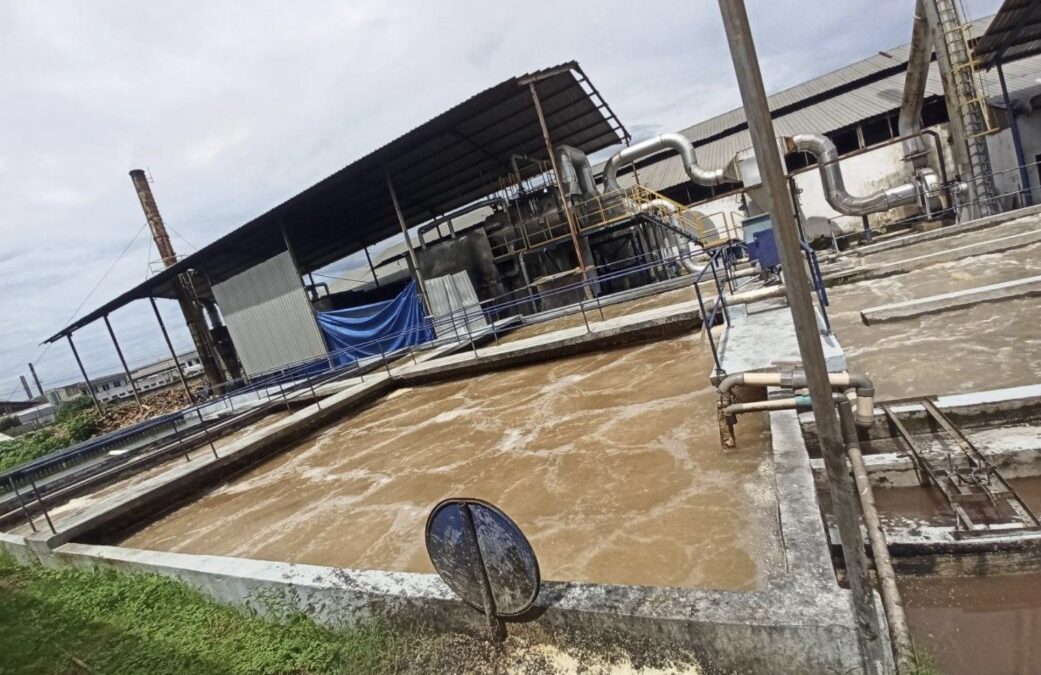

Universitas Negeri Malang (UM) continues to strengthen its contribution to environmental research through the development of fishery industry wastewater treatment technology based on Upflow Anaerobic Sludge Blanket (UASB) reactors. As part of strengthening its role in international-level research, Universitas Negeri Malang is conducting a study titled “Sustainable Treatment of Fish Processing Wastewater by Anaerobic Granular Sludge in Upflow Anaerobic Sludge Blanket (UASB) Reactors.” This research is supported through the Postdoctoral Researcher scheme, which encourages cross-country collaboration while enhancing global research capacity.
The research is led by Eli Hendrik Sanjaya, Ph.D., from the Department of Chemistry, who also serves as the Head of the Center for Science and Engineering (PSR) at LPPM UM. The research focus is directed toward the development of wastewater treatment technology for the fish processing industry by utilizing a granular sludge-based UASB system.
UASB technology is known for its effective ability to reduce organic pollutant levels in wastewater. Furthermore, this process produces biogas that can be utilized as a renewable energy source, thereby providing added value in terms of sustainability.
This research involves international collaboration with Hong Chen from Changsha University of Science and Technology (CSUST), China, as well as a postdoctoral researcher from Malaysia, Dr. Nur Fatihah. This collaboration is part of an effort to expand global research networks while accelerating technology transfer in the field of biotechnology-based waste treatment.
According to Eli Hendrik Sanjaya, wastewater from the fishery industry represents a significant environmental challenge because it contains high amounts of organic matter, fats, and proteins that have the potential to pollute water bodies. Through the anaerobic granular sludge approach in UASB reactors, this research is not only able to optimally reduce pollution levels but also convert waste into energy in the form of biogas.
The results of this research are expected to contribute to the achievement of various Sustainable Development Goals (SDGs), including improving waste treatment quality (SDG 6), utilizing clean energy through biogas (SDG 7), industrial technology innovation (SDG 9), sustainable waste management (SDG 12), and reducing the impacts of climate change (SDG 13).
In addition to producing scientific publications in reputable international journals, this research is also expected to serve as a foundation for the development of fishery industry wastewater treatment technology in Indonesia, particularly for small and medium-sized industrial scales.
With an efficient and environmentally friendly approach, UASB technology has great potential as a solution to support more sustainable fishery industry practices. This initiative also reaffirms the commitment of Universitas Negeri Malang to developing flagship research based on international collaboration and contributing to the resolution of environmental issues through science and technology innovation.